
What Is C-Bus, and Is Clipsal C-Bus Worth It for Your Home?
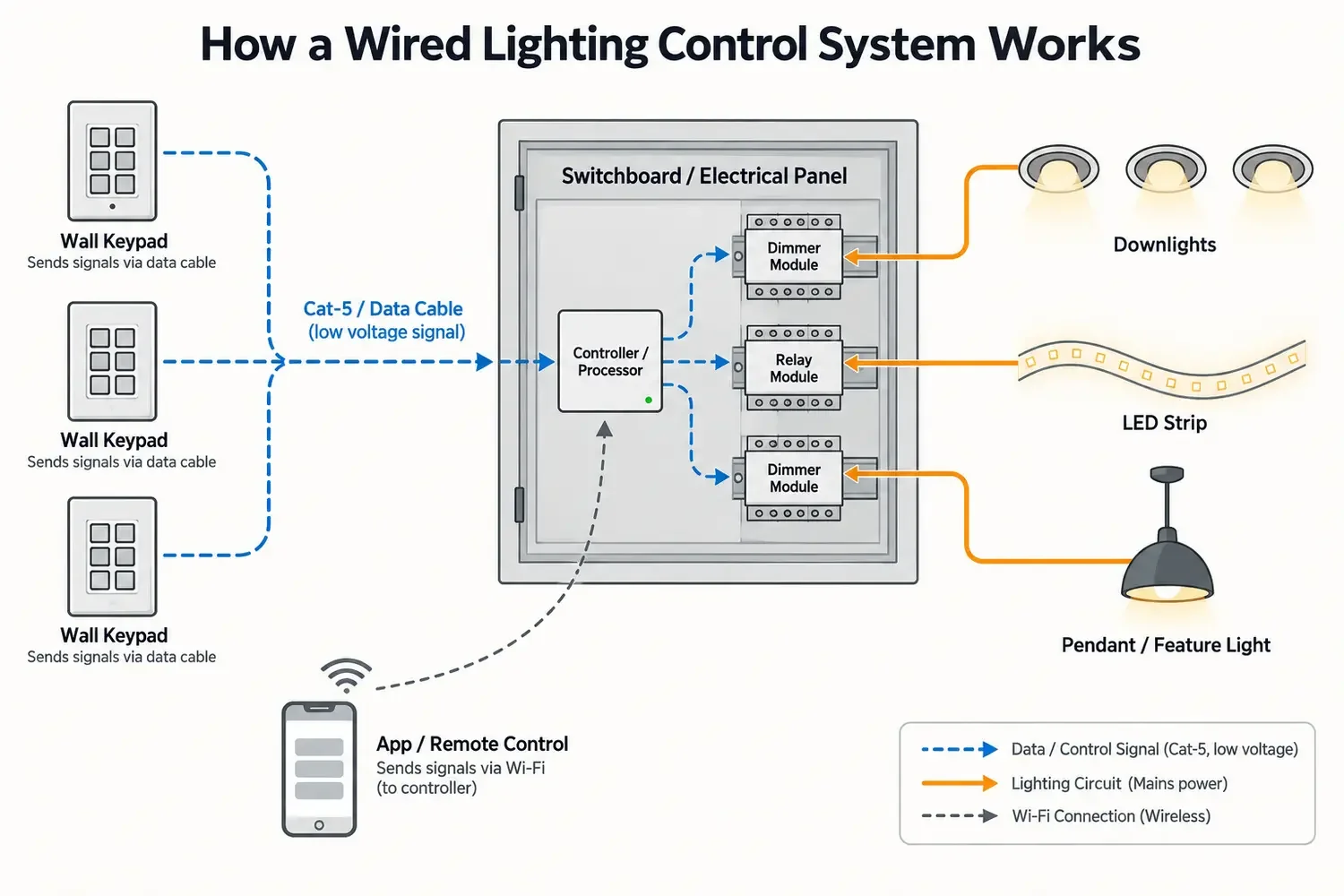
C-Bus is Clipsal's wired lighting and home control system, made by Schneider Electric and used in Australian homes and buildings since the 1990s. Instead of each switch directly powering a light, keypads send signals over a dedicated data cable to dimmers and relays in the switchboard. That lets one button run a whole scene, and lets schedules, sensors and apps control the house.
How C-Bus works
A conventional light switch sits in the circuit: it physically connects and disconnects power to the light. C-Bus separates the switch from the power.
- Inputs are the things you touch or that sense the house: wall keypads, touchscreens, motion sensors, light-level sensors and the app on your phone.
- The C-Bus network is a dedicated low-voltage data cable that links every input and output. A wireless version is also available for situations where running new cable isn't practical.
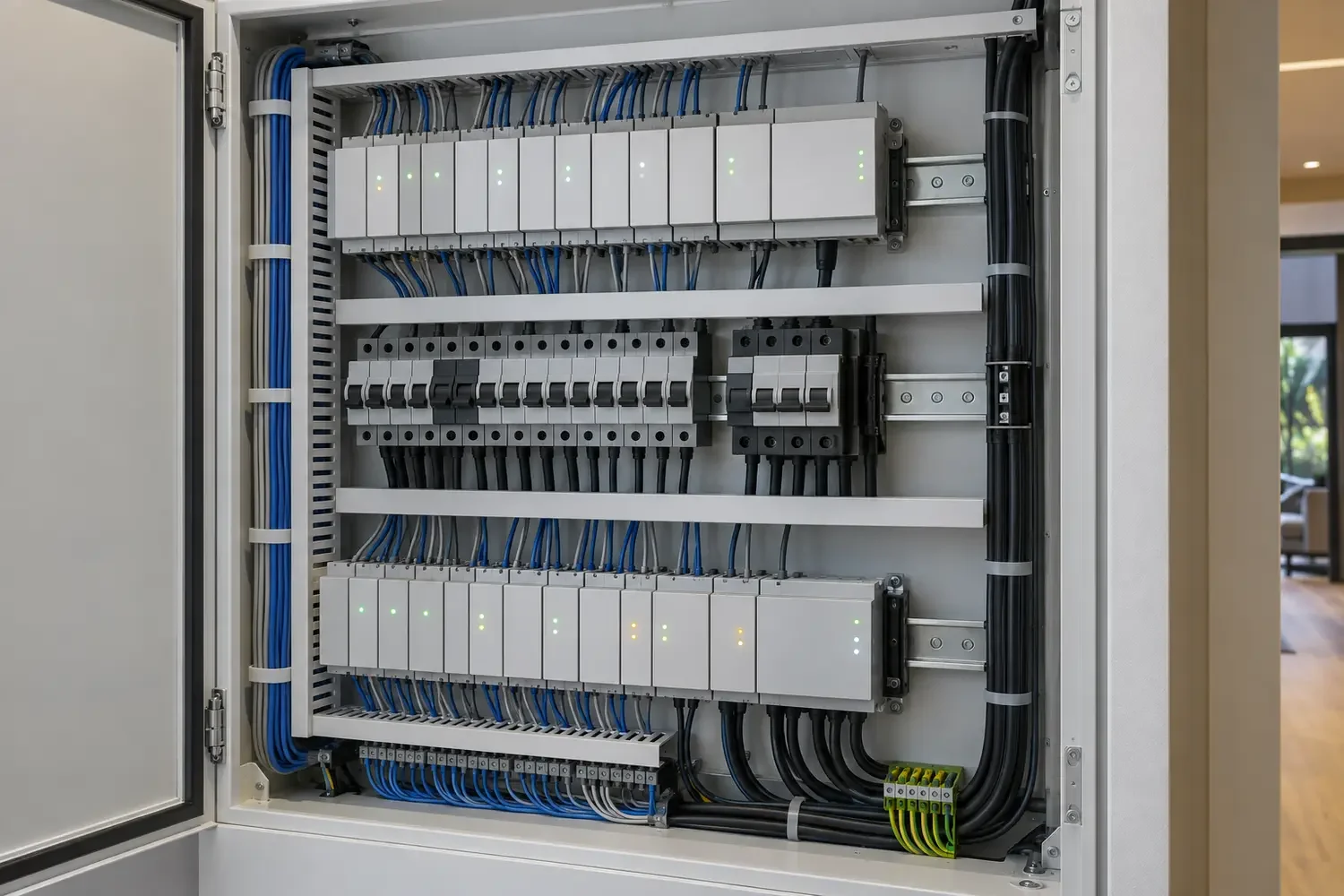
- Outputs are dimmer and relay modules, usually mounted in the switchboard. Each one controls one or more lighting circuits, fans, blinds or other loads.
- Programming tells each output which inputs to listen to. Press a button and the message travels over the network; every output programmed for that button responds.
Because the logic lives in the units rather than a single central computer, a well-installed C-Bus system is fast and dependable. It doesn't rely on your Wi-Fi to turn the lights on.
What C-Bus can do in a home
- Scenes. One button for "dinner", "movie" or "entertaining" sets several circuits to preset levels at once.
- All off. A single button at the front door or garage turns off every light in the house as you leave.
- Schedules. Garden, facade and pool-area lights come on at dusk and off at a set time, adjusting through the seasons.
- Sensors. Hallways, stairs, robes and garages light up as you walk in and switch off when you leave.
- Holiday mode. Lights switch on and off in a realistic pattern while you're away.
- Integration. C-Bus can be linked to blinds, fans, security, audio-visual and climate systems, and controlled from an app or touchscreen.
C-Bus vs standard switching vs wireless smart lighting
| Standard switching | Wireless smart switches | C-Bus (wired) | |
|---|---|---|---|
| Upfront cost | Lowest | Low to medium | Medium to high |
| Reliability | Very high | Depends on the wireless network | Very high |
| Scenes, schedules and app control | No | Yes | Yes |
| Change what a button does later | Rewire | Reprogram | Reprogram |
| Integration with other systems | No | Varies | Extensive |
| Must be planned at frame stage | No | Helpful, not essential | Yes |
| Best for | Simple homes, tight budgets | Renovations, smaller homes | New builds, larger homes, long-term owners |
What does C-Bus cost?
C-Bus costs more than standard switching, because you're paying for keypads, dimmer and relay modules, data cabling and programming time on top of the normal electrical work. The main things that drive the price are:
- the number of lighting circuits and how many need dimming
- the number and style of keypads and any touchscreens
- whether blinds, fans, security or AV are integrated
- how much programming and scene set-up you want
- whether the home is a new build (cabling is simpler) or existing (harder, or wireless)
The best way to compare it with other options is to price the same lighting plan both ways. Ask for a quote for standard switching with dimmers, and for a C-Bus or other smart system, so you can see the difference for your home rather than an average.
Planning a build or renovation?
Luxe designs and installs architectural lighting across the Sunshine Coast and Brisbane. Book a lighting consultation.
Is C-Bus worth it?
C-Bus usually makes sense if:
- you're building a larger home with many lighting circuits
- you plan to stay long term, so the upfront cost is spread over many years
- you want scenes, schedules and sensors throughout the house
- you'd like lighting to work with blinds, security, AV or climate control
It's probably not worth it if:
- the home is small or the lighting is simple
- the budget is tight and would be better spent on better fittings
- you're renovating an existing home and don't want to open walls, in which case a wireless system is usually the practical choice
We compare C-Bus with KNX, DALI and wireless systems in more detail in our guide to smart lighting for new builds. If you're at the planning stage, our checklist of decisions to lock in before frame stage explains why the control system has to be chosen early.
Already have C-Bus?
Plenty of Sunshine Coast and Brisbane homes built in the last two decades already have C-Bus. Common questions from owners include keypads that flash or stop responding, scenes that no longer suit how the house is used, adding app control, and replacing dated keypads with newer styles. Many of these are reprogramming or hardware updates rather than rewiring. An electrician familiar with C-Bus can diagnose the system and tell you what's worth updating.
Planning smart lighting for your home
Whether C-Bus, another wired system or wireless smart switches suit your home depends on the size of the build, your budget and how you want to live in it. Our smart lighting and automation service starts with that conversation, and it works hand in hand with luxury home lighting design. For more on the system itself, see Clipsal's C-Bus overview.
Frequently asked questions
What is C-Bus?
C-Bus is a wired home and building control system from Clipsal by Schneider Electric. Keypads and sensors send signals over a dedicated data cable to dimmers and relays in the switchboard, so lights and other devices can be grouped into scenes, scheduled and controlled from an app.
How does the C-Bus system work?
Each input device (keypad, sensor or touchscreen) and output device (dimmer or relay) sits on a shared C-Bus data network. Pressing a button sends a message; the output units listening for it switch or dim their circuits. Programming sets which buttons control which lights.
What's the difference between C-Bus and KNX?
Both are wired building control systems. C-Bus is a Clipsal product line widely used in Australia. KNX is an open international standard supported by hundreds of manufacturers. KNX gives more hardware choice; C-Bus is familiar to many Australian electricians and has a long local track record.
Is C-Bus worth it for a new home?
It's worth it for larger homes with many lighting circuits, owners who plan to stay long term, and anyone who wants scenes, schedules and integration with blinds, security or AV. For small homes or tight budgets, a wireless smart system is usually better value.
Can C-Bus be added to an existing home?
A full wired C-Bus system is easiest at frame stage, because it needs its own data cabling to every keypad. In existing homes, wireless C-Bus or other wireless smart switches can give similar control without opening walls.
Get your free lighting quote.
Call 0411 212 528 or request your consultation. Licensed electrical contractor #90549.
